
Best DIY Mini Splits: Pre-Charged Systems Compared
Which DIY mini split to buy in 2026: every pre-charged quick-connect line compared on voltage, SEER2, cold-weather heat, line length, warranty and price.
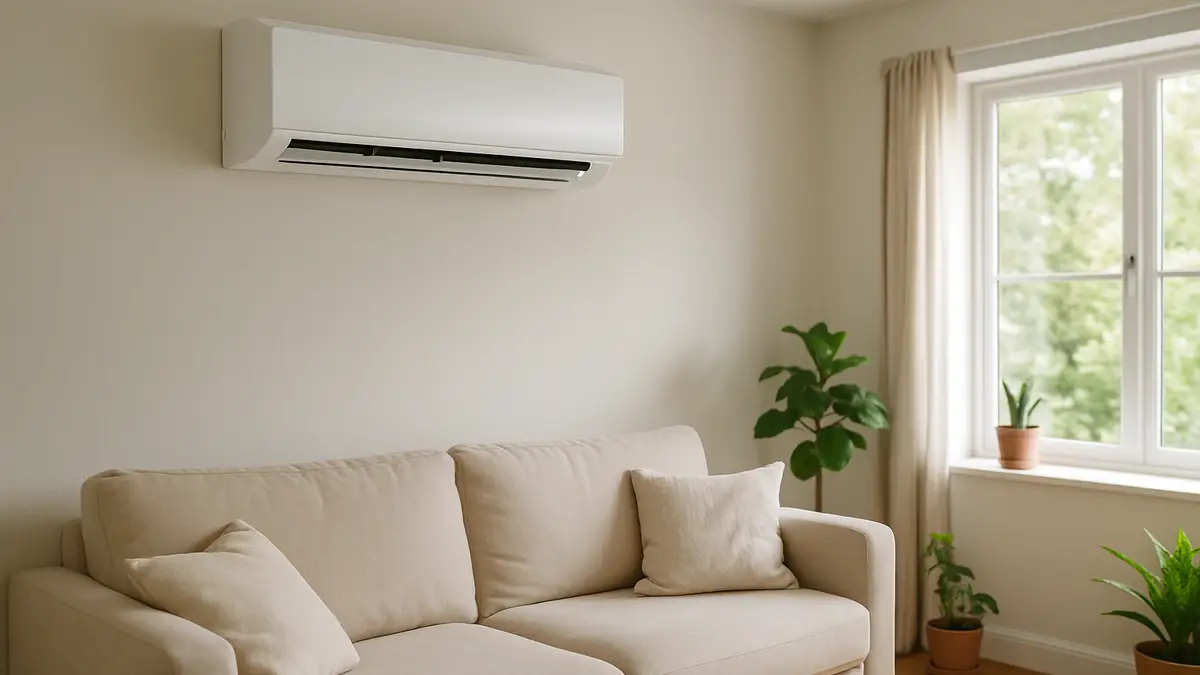
A DIY mini split is a ductless heat pump whose refrigerant lines come sealed and pre-charged, so a homeowner can connect the indoor and outdoor units without a vacuum pump, gauges or flaring tools. In October 2026 the only quick-connect systems we could verify from spec sheets and certification listings are MRCOOL’s four lines, so this page compares those four against each other and explains what the “DIY-friendly” alternatives really require.
What counts as a DIY mini split?
A true DIY mini split ships with a pre-charged line set that has quick-connect fittings on both ends, so the refrigerant never leaves a sealed system during installation. MRCOOL’s DIY 5th Gen manual describes the set as a one-time connection: the seal “cannot be guaranteed” if it is connected more than once, and doing so voids the warranty.
Many units sold online as “DIY-friendly” are conventional systems with a standard copper line set. Those need the lines flared or connected, pulled into a deep vacuum and leak-checked before the refrigerant is released, which is licensed HVAC work in most places. The retail listings for the Senville Aura and Pioneer Diamante Pro both say a licensed or qualified professional must install them.
Either way, the power side is not owner work. Every system on this page needs its own circuit and an outdoor disconnect run by a licensed electrician under your local code.
Which DIY mini splits are worth buying in 2026?
Four product lines from one manufacturer cover the market for pre-charged quick-connect single-zone systems. They differ most in efficiency, cold-weather heating and warranty length.
| Line (refrigerant) | Sizes and voltage | SEER2 / HSPF2 | Heat at 5 F (ENERGY STAR) | Line set in box / max run | Warranty (parts / compressor) | Street price, Oct 2026 |
|---|---|---|---|---|---|---|
| MRCOOL DIY 5th Gen (R-454B) | 9k, 12k at 115 V; 18k, 24k, 36k at 208-230 V | 18.0-23.6 / 8.5-11.5 | 7,300 (9k) to 16,100 (24k) BTU/h | 25 ft (24.6 ft) / 75 ft | 5 yr / 7 yr | $1,880-$3,469 |
| MRCOOL DIY 5th Gen Hyper Heat (R-454B) | 12k, 18k at 208-230 V | 21.2-23.5 / 10.0-11.0 | 11,000 (12k), 18,000 (18k) BTU/h | 25 ft / see manual | 5 yr / 7 yr | $2,532-$3,173 |
| MRCOOL DIY Easy Pro (R-454B) | 9k, 12k at 115 V; 18k, 24k at 208-230 V | 18.9-20.2 / 8.5-9.3 | 6,200 (9k); others not listed | 11.5 ft (some bundles 16 ft) / 75 ft | 3 yr / 5 yr | $1,388-$2,149 |
| MRCOOL DIY Select (R-454B) | 9k, 12k at 115 V; 18k, 24k at 208-230 V | 16.5-17.5 / 8.3-9.0 (preliminary) | Not ENERGY STAR | 11.5 ft / not published | 1 yr / 2 yr | $1,249-$1,899 |
Prices are Sylvane listings checked on October 6, 2026; they move weekly. Ratings come from the ENERGY STAR mini-split dataset, AHRI certificates and MRCOOL brochures.
Best overall: which DIY mini split should most people buy?
The MRCOOL DIY 5th Gen is the default pick for one room. The 12k 115 V unit (DIY-12-HP-C-115D25-O) is rated 23.5 SEER2 and 10.2 HSPF2, carries ENERGY STAR cold-climate certification, and listed at $1,880 at Sylvane in October 2026. The 9k is the most efficient model in the whole DIY category at 23.6 SEER2.
Three things separate it from the cheaper lines. It ships with the longest pre-charged set (25 ft), its manual allows a 75 ft total run, and it has the longest warranty: 5 years on parts, including the pre-charged line sets, and 7 years on the compressor, with no registration required. MRCOOL’s warranty PDF (rev. 07.03.25) is the document that counts; some retailer pages still describe a “lifetime” warranty.
Our full spec walk-through, size by size, is in the MRCOOL DIY 5th Gen review.
Not for: rooms above about 1,500 sq ft, where one 36k head (18.0 SEER2, not ENERGY STAR) is a weak answer, and homes that need several rooms conditioned from one outdoor unit; see multi-zone mini splits.
Best for cold climates: is the Hyper Heat worth the extra money?
Yes, if the room must be heated by the mini split alone in climate zone 5 or colder. ENERGY STAR lists the Hyper Heat 12k (DIYHH-12-HP-C-230D25-O) at 11,000 BTU/h of heat at 5 F outdoors, against 8,400 BTU/h for the standard 5th Gen 12k. The Hyper Heat 18k holds its full 18,000 BTU/h at 5 F.
That gap is about 30% more heat on the coldest nights for roughly $650 more at October 2026 prices ($2,532 vs $1,880 for the 12k). Retailer listings market the Hyper Heat to -22 F; the standard 5th Gen manual lists heating down to -13 F.
The trade-off is power: both Hyper Heat sizes run on 208-230 V only, so a 115 V-only garage or addition does not qualify.
Not for: zones 1 to 4, where the standard 5th Gen already carries the heating load and costs less.
Best value: when does the Easy Pro make sense?
The Easy Pro is the middle line: the same quick-connect idea at $1,388 to $2,149 in October 2026, with lower efficiency (18.9 to 20.2 SEER2) and a shorter warranty (3 years parts, 5 years compressor). Its parts warranty also excludes the line sets, which the 5th Gen warranty covers.
It fits a cooling-first room in a mild climate where the price gap matters more than heating at 5 F. Only the 9k is ENERGY STAR certified; ENERGY STAR lists it at 6,200 BTU/h of heat at 5 F.
MRCOOL’s brochure lists an 11.5 ft pre-charged set in the box, with 16, 25, 35 and 50 ft sets and a coupler sold separately. Plan the run before you buy; our line set guide covers lengths and covers.
Not for: a room you plan to heat through a northern winter.
Lowest price: what do you give up with the DIY Select?
The DIY Select is the cheapest quick-connect line at $1,249 (9k) to $1,899 (24k) in October 2026, and it gives up the most. MRCOOL’s brochure marks its 16.5 to 17.5 SEER2 figures as preliminary, none of the sizes appear in the ENERGY STAR dataset, and no maximum line run is published.
The warranty is the real cost: 1 year on parts and 2 years on the compressor, against 5 and 7 years on the 5th Gen. On a 12k, the 5th Gen costs about $480 more at October 2026 prices and adds five years of compressor coverage.
Not for: anyone who expects to keep the unit past a few seasons, or who needs reliable heat.
Can a DIY mini split run on 115 volts?
Yes, but only the small sizes. In all three standard MRCOOL lines, the 9k and 12k run on 115 V and everything from 18k up needs 208-230 V. The 5th Gen 9k and 12k list an 18 A minimum circuit ampacity and a 20 A maximum fuse for the outdoor unit.
115 V does not mean “plug it into an outlet.” The unit still needs a dedicated circuit and an outdoor disconnect, sized and installed by a licensed electrician to the manual and local code. What 115 V saves you is a 240 V run from a panel that may have no room for a double-pole breaker.
If the room needs more than 12,000 BTU/h, the choice is 230 V or two small units; the garage guide covers that case in detail.
What about Pioneer, Senville and other “DIY” brands?
They are good-value conventional mini splits, not quick-connect DIY systems. Sylvane’s October 2026 listing for the Senville Aura 12k ($1,399.99) says it “must be installed by a state-certified or licensed HVAC professional” for the 10-year warranty to be valid. The Pioneer Diamante Pro 12k 115 V listing ($888) says it “must be installed by a qualified professional.”
Their real price therefore includes a contractor’s refrigerant work, which our installation cost guide prices line by line. ENERGY STAR lists many other mini-split brands that sell online, including EG4’s solar-assisted units; we could not confirm from a spec sheet which of their models use pre-charged quick-connect lines, so they are not in the table. EG4 and other hybrid units are covered on our solar mini split page.
What does a DIY install still involve?
A quick-connect system removes the refrigerant tools, not the work. MRCOOL’s 5th Gen manual has the homeowner mount the indoor plate, core-drill a 3.54 in (90 mm) wall hole, set the outdoor unit on a pad or bracket, route the line set and control cable, and tighten each fitting to a specified torque with a torque wrench, outdoors, in dry weather.
Things the manual is firm about: never connect a fitting twice, do not cut the pre-charged line (coil excess flat behind the condenser), and keep the fittings free of dirt and moisture. Refrigerant loss from a dirty or reused fitting is not covered.
The electrical work, permit and any inspection sit outside the DIY scope. Follow the manual, your local code and a licensed electrician. The cost guide shows what those pieces add to the kit price.
What size DIY mini split do you need?
Size from the room, not from the manufacturer’s coverage claim. MRCOOL lists “max coverage” of up to 550 sq ft for the 12k “under ideal installation conditions”; the ENERGY STAR room sizing chart puts 12,000 BTU/h at 450 to 550 sq ft before any adjustment for sun, ceiling height or a kitchen.
Our mini split sizing calculator applies those adjustments, adds a heating check against each model’s published capacity at 47, 17 or 5 F, and flags when the line run or voltage rules a model out. For more than one room, compare a multi-zone system with several single-zone units, and for a hidden indoor unit, see ducted and cassette options.
Who should not buy a DIY mini split?
A DIY mini split is the wrong buy in four cases:
- Whole-house replacement of central air. One head per room gets expensive and a Manual J load calculation by a contractor is the right starting point; weigh the pros and cons against central air first.
- No electrician budget. Expect a dedicated circuit to cost $250 to $900 (HomeGuide, October 2025); skipping it is not an option.
- Line runs over 75 ft or big height differences. The 5th Gen manual caps the 9k and 12k at 49.2 ft of elevation.
- Renters or anyone likely to move the unit. The line sets are single-use, and MRCOOL’s warranty excludes units moved from their original address.
Where do these numbers come from?
- ENERGY STAR Certified Mini-Split Heat Pumps dataset (data.energystar.gov, dataset akti-mt5s, read October 6, 2026): SEER2, HSPF2, heating capacity at 5 F, cold-climate status.
- MRCOOL DIY 5th Gen single-zone brochure (V 06.24.26) and installation manual; MRCOOL limited warranty PDFs for DIY 5th Gen (rev. 07.03.25), DIY Easy Pro and DIY Select, linked from mrcool.com/warranty-information.
- Street prices: Sylvane product listings, October 6, 2026.
- Circuit cost: HomeGuide, cost to install a dedicated circuit, updated October 15, 2025.
DuctlessWise did not test these units. Specifications come from the sources above, and prices are what the listings showed on the date given.
Frequently asked questions
Quick answers to what readers ask us most
Can you really install a mini split yourself?
The refrigerant side, yes, if you buy a pre-charged quick-connect system such as the MRCOOL DIY lines: the line set arrives sealed and charged, so there is no flaring, vacuum pump or charging. The electrical side is not a DIY job. MRCOOL's installation manual says all wiring must be installed by a licensed electrician, and the warranty requires installation per the manual and local codes and permits.
What is the best 115 V DIY mini split?
The MRCOOL DIY 5th Gen 9k (23.6 SEER2) and 12k (23.5 SEER2) are the most efficient 115 V quick-connect units we found, and both are ENERGY STAR cold-climate certified. They still need their own dedicated circuit (the outdoor unit lists a 20 A maximum fuse), not a shared wall outlet.
Does a DIY mini split void the warranty?
Not with MRCOOL's DIY lines, which are sold for homeowner installation. The warranty does require that the system is installed according to the instructions and local electrical codes and permits, and it excludes damage from faulty installation. Conventional units sold online, such as Senville Aura and Pioneer Diamante Pro, state that a licensed or qualified professional must install them.
How cold can a DIY mini split heat?
The MRCOOL DIY 5th Gen manual lists heating down to -13 F outdoors, and ENERGY STAR lists the 12k delivering 8,400 BTU/h at 5 F. The 5th Gen Hyper Heat 12k holds 11,000 BTU/h at 5 F and is marketed to -22 F. For a heated room in zone 5 or colder, check capacity at 5 F, not the nameplate.
How big a DIY mini split do I need?
Start from the room's square footage and adjust for ceiling height, sun, insulation and climate. Our mini split sizing calculator does that math and matches the result to real quick-connect models, including their capacity at 5 F.